contactus@nwu.edu.ng | Call us
+234 9045292260

The Centre for Gender Studies and Family Development (CGSFD) at Northwest University, Kano, in partnership with the International Institute of Islamic Thought (IIIT), Kano, commemorated the 2026 World Family and Culture Day. The event brought together the Vice Chancellor (ably represented by the Acting Vice Chancellor, Prof. Aisha Habib Garba), the University Librarian, the former Vice Chancellor Prof. Mukhtar Atiku Kurawa (also represented by Prof. Muhammad Bilyaminu Ado), notable religious and community leaders including Prof. Umar Sani Fagge and Dr. Sa’idu Ahmad Dukawa (Chairman of the Occasion and National coordinator IIIT), the Provost of Sa’adatu Rimi College of Education, Kumbotso, the Provost of the Federal College of Agriculture, Kirika Samma, Jigawa State, CGS Directors from ADJTECH, FUD, BUK, and KHAIRUN, Deans and Directors, academic and non-academic staff and students of Northwest University, civil society organizations, and other community partners. Together, they addressed serious social challenges including family instability, gender-based violence, drug abuse, child vulnerability, moral decline, economic hardship, and weakening family bonds.
In her address the Director, Dr. Ruqayyah Hamidu Muhammad, stated that; the Centre was established as a multidisciplinary platform dedicated to advancing research, advocacy, counselling, policy dialogue, and practical interventions aimed at restoring hope, strengthening families, and promoting responsible citizenship.
The Centre’s work is organized around three intervention areas: a Gender and Family Research Unit focused on policy-relevant research and evidence-based recommendations; an Advocacy, Counselling and Gender-Based Violence Prevention Unit involved in public sensitization, anti-violence campaigns, rehabilitation support, and economic empowerment for women, youth, and vulnerable groups; and a Marriage, Family Life and Child Development Unit offering premarital counselling, parenting education, and a structured matchmaking initiative to facilitate healthy marriages within a morally guided framework.
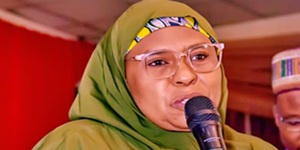
The Vice Chancellor of the University, Prof. Amina Salihi Bayero, ably represented by the Deputy Vice Chancellor (Academic), Prof. Aisha Habib Garba, reiterated her continued support for the Centre, warmly welcomed the invited guests, and wished everyone successful and impactful deliberations.
Two papers were presented at the event. The first paper was presented by the Deputy Vice Chancellor (Academic) of NWU, Prof. Aisha Habib Garba. The paper establishes that the family is the most fundamental social unit and the bedrock of any healthy society. Defined as a group united by blood, marriage, adoption, or fosterage, the family serves as the primary agent for socialization, moral training, and emotional support. A stable family is characterized by healthy communication, mutual respect, adherence to responsibilities, and provision of security (social, financial, and mental). When these foundations are present, families produce emotionally resilient, morally upright, and productive individuals. Conversely, family instability driven by economic hardship, urban migration, and religious or cultural shifts leads to juvenile delinquency, social vices, and weakened community bonds.
The paper draws a direct and powerful link between family stability and national development. Stable families cultivate citizens with strong moral values, emotional resilience, and economic independence. These citizens become productive workers, honest leaders, and law-abiding members of society. The benefits include higher academic performance in children, reduced rates of anxiety and depression, lower juvenile delinquency, and reliable care for the elderly and vulnerable. In essence, national development—which encompasses economic growth, social progress, infrastructure, human capital, political stability, and technological advancement—cannot be sustainably achieved without first strengthening the family unit. The paper concludes by recommending investment in family stability as a direct strategy for achieving lasting national development. Strong families produce responsible citizens, and responsible citizens, in turn, build strong, prosperous, and cohesive nations.
Discussion of the presented paper was led by Prof. Umar Sani Fagge. He began his lecture with a verse from the Qur’an, Surah An-Nisa (4:1), which explains the origin of humanity and marriage through the creation of Adam and Hawwa (Eve): “O mankind! Fear your Lord, who created you from a single soul (Adam), and from it created its mate (Hawwa), and from the two spread many men and women…” He emphasized that marriage is a divine institution established by Allah for companionship, stability, dignity, and the continuation of humanity. According to him, true integrity, responsibility, and social balance are better preserved within lawful marriage and stable family systems.
He further discussed different family systems and highlighted how, in earlier societies, extended family responsibility was encouraged. He explained that in some systems, a man who responsibly cared for members of his extended family received certain social and economic advantages, including lower taxation from the government. This was meant to encourage family responsibility, social welfare, and communal support. The professor stressed that strong family structures contribute to moral upbringing, social stability, and national development, while weakened family ties often lead to social problems and moral decline.
The second lecture was delivered by Dr. Ruqayyah Hamidu Muhammad, the Director of the Centre, whose paper emphasized that parenting is the foundation of a peaceful and morally upright society. Modern society has brought many challenges, such as social media influence, weak family communication, moral decline, peer pressure, and economic hardship. Parents today must therefore become more intentional in raising children with discipline, love, guidance, and strong moral values. The presentation explained that parenting is not only about providing food, shelter, and education but also about emotional support, supervision, character building, and teaching responsibility. Among the parenting styles discussed, the authoritative style, combining love with discipline, was identified as the most effective.
The lecture further highlighted that weak parenting can lead to emotional, behavioral, social, and spiritual problems in children, which eventually affect society through insecurity, crime, and moral decay. The paper concludes by recommending strengthening family bonding, practicing digital parenting, restoring moral and religious education, encouraging positive activities, and ensuring parents serve as good role models. It also stressed that raising responsible children is a shared responsibility involving parents, schools, religious institutions, and the wider community.
The second paper was discussed by Mal. Mustapha Cinade, who focused specifically on types of parenting and stressed the urgent need to adopt the most effective style to raise a responsible future generation. While the original paper highlighted family stability as the foundation for national development, he contrasted authoritarian, permissive, uninvolved, and authoritative parenting styles, arguing that authoritative parenting (balanced warmth and discipline) produces the most morally grounded, resilient, and socially responsible children.
The event came to an end with goodwill messages from some of the attending organizations, presentations of awards, and group photographs.